


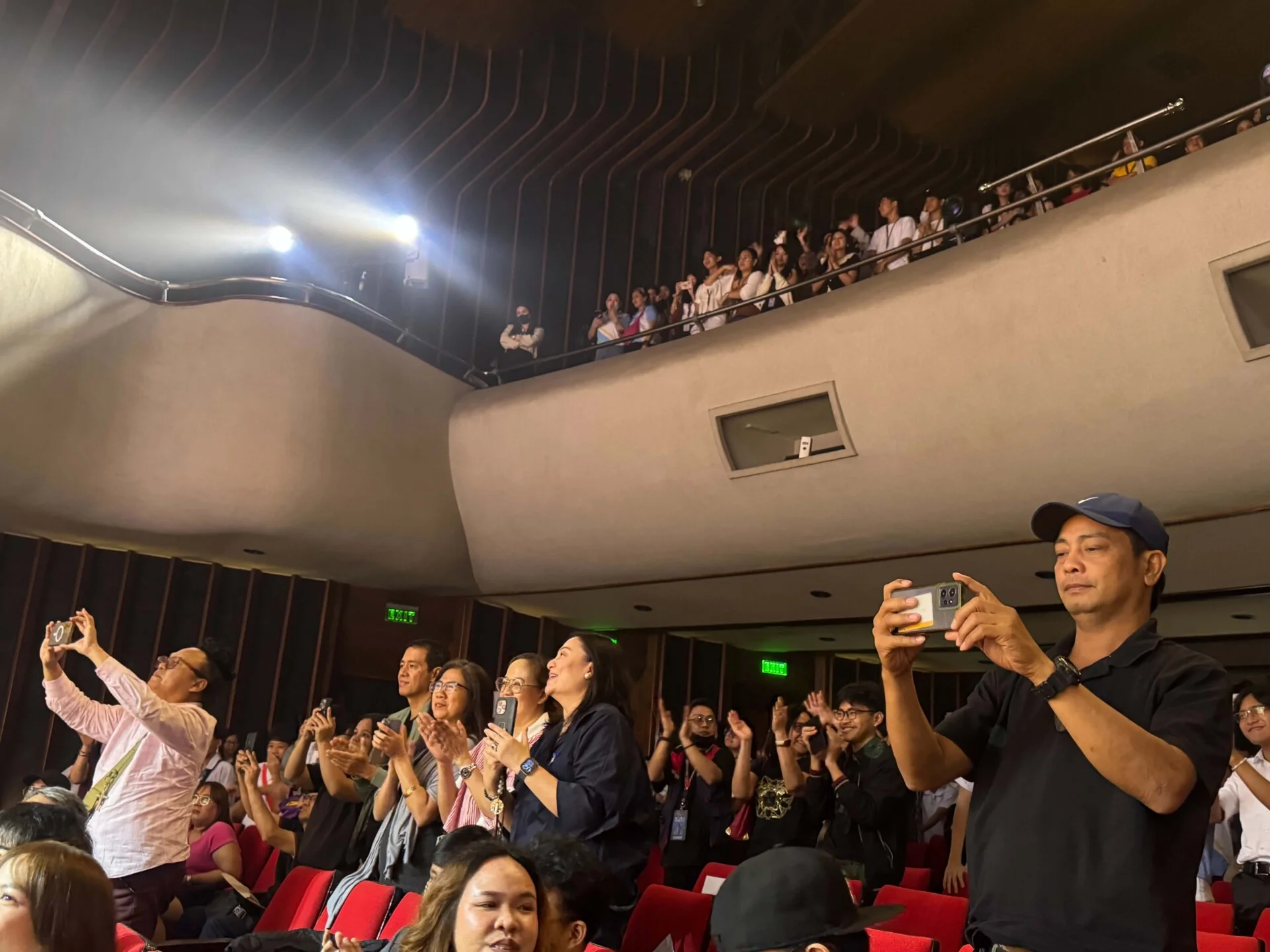
The best measure of a theatrical production is if it captures the very target market it hopes to reach. For Rizal 3000, the original Filipino musical by Philippine Stagers Foundation (PSF), the enthusiastic response of students from Pasay National High School during its October 11 performance gave a very clear answer. The young audience was obviously entertained, reacting to the punchlines with laughter and the romantic scenes with shrieks of kilig. Beyond the fun, however, the production carries a message worth taking home. That is the reminder that a nation cannot afford to forget its history.
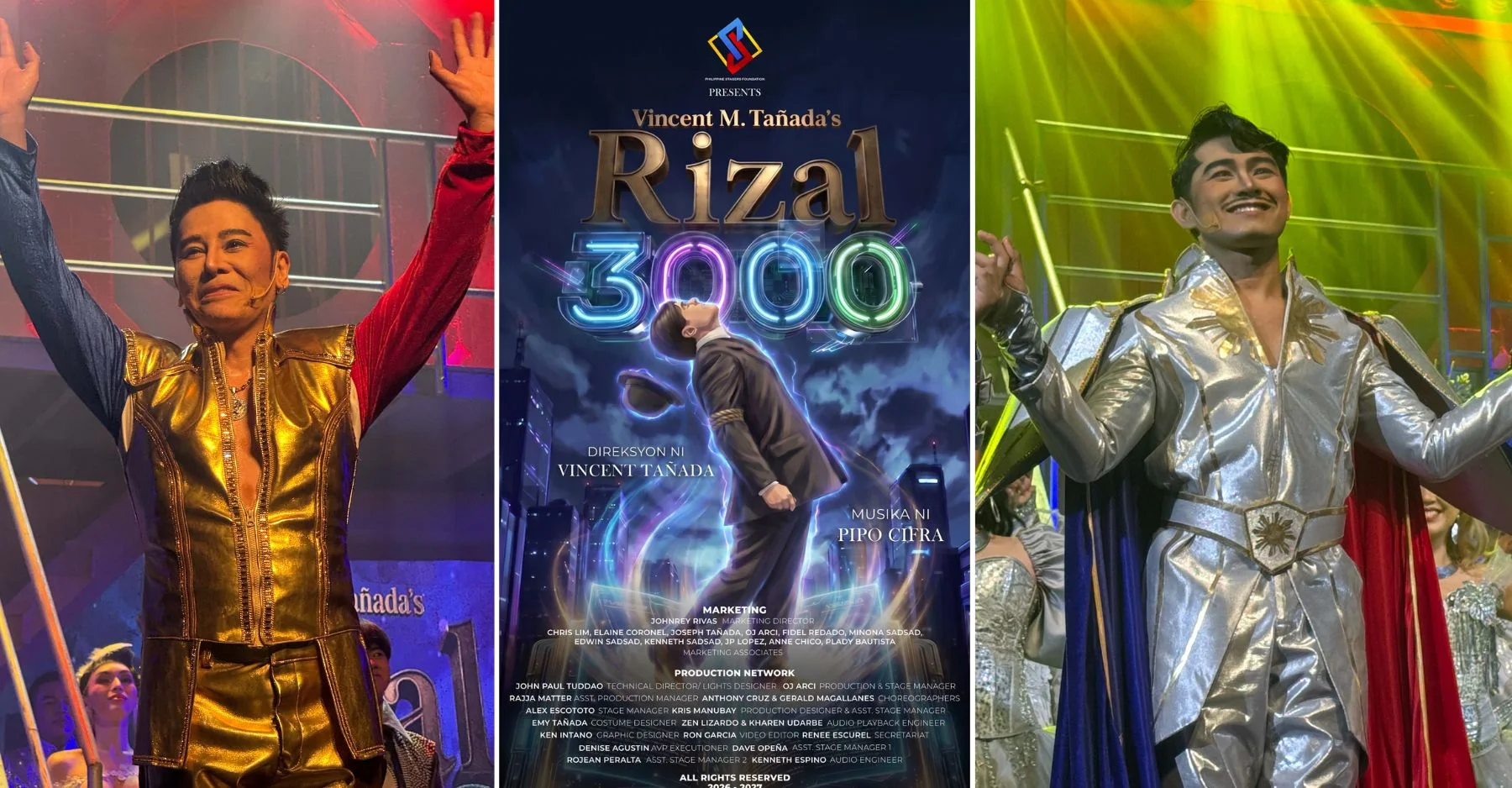
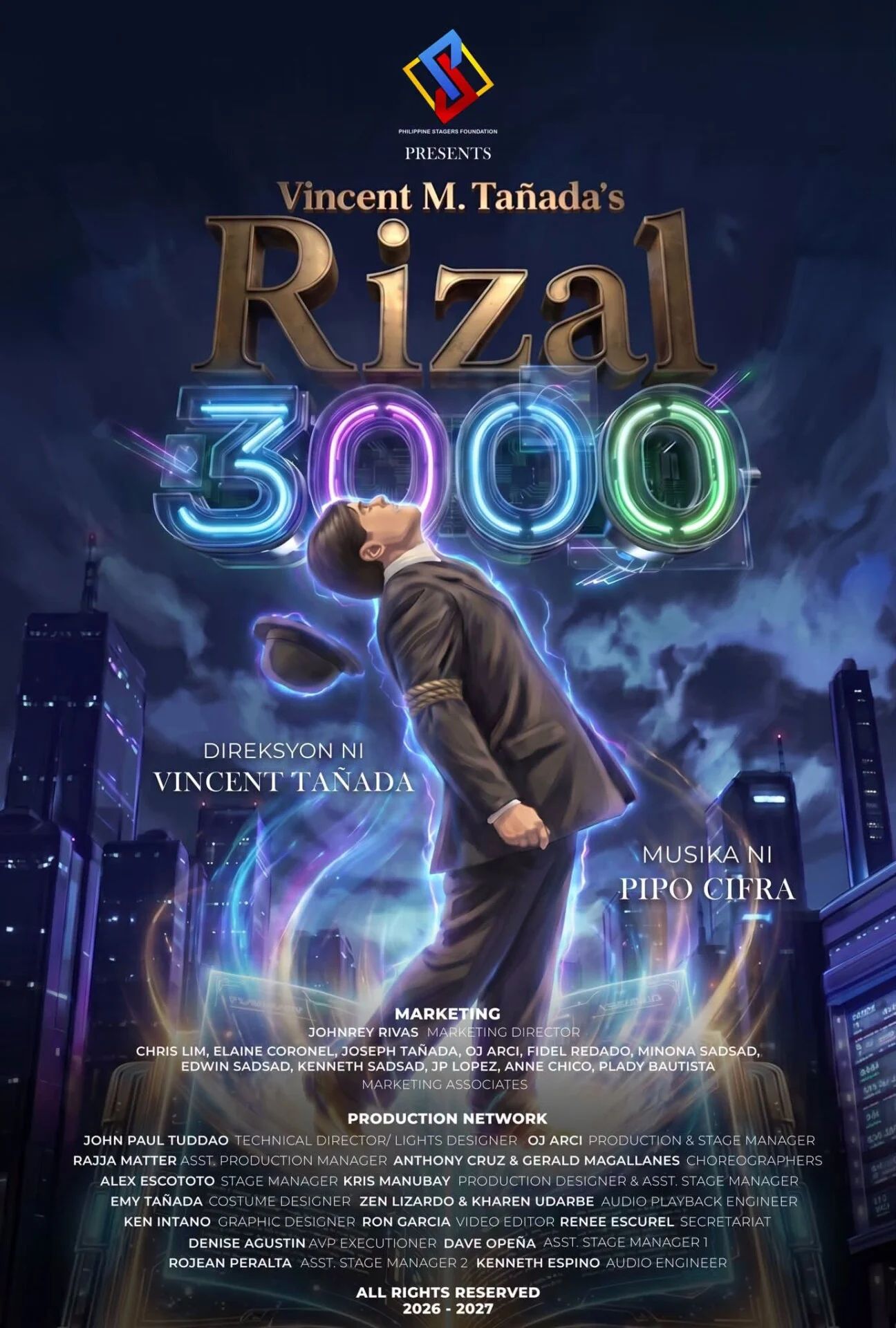
Written and directed by PSF artistic director Atty. Vincent M. Tañada, with music by Pipo Cifra, Rizal 3000 brings the story and ideals of Dr. Jose Rizal into a futuristic setting. Rather than presenting the national hero through a conventional historical narrative, the musical imagines what the Philippines might look like if future generations were stripped of their knowledge of the past.


The year is 3000. An authoritarian government has outlawed history, banned books, and reshaped education to serve its interests. Rizal, once regarded as the country’s national hero, has been erased from public consciousness. Iosephus, one of the last people committed to preserving the truth, risks everything to protect the hero’s legacy. The discovery of a hidden diary by his son, Franchesco, sets in motion a journey that brings Rizal’s life, principles, and sacrifices back into the light.



The premise gives the production room to combine political commentary, historical lessons, romance, humor, and spectacle. Judging from the students’ reactions, the mix works. The comedic exchanges land, the kilig moments generate audible excitement, and the audience remains engaged with a story that might otherwise feel distant to younger viewers.
That connection is particularly important to Tañada, whose work has consistently championed the place of theater in education and national consciousness.
In his director’s notes, he posed a question that frames the entire production, “How do you make the past speak to the future without losing the soul of either?”
For Tañada, the answer required more than retelling familiar events. He describes the musical as an effort to bring together two contrasting worlds — the Philippines during Rizal’s time, shaped by history and revolution, and an imagined future in which technology has become an instrument of forgetting rather than remembering.
“Bridging these two eras while allowing them to speak to each other with clarity, emotion, and purpose has been both the greatest difficulty and the greatest fulfillment of this work,” he wrote.
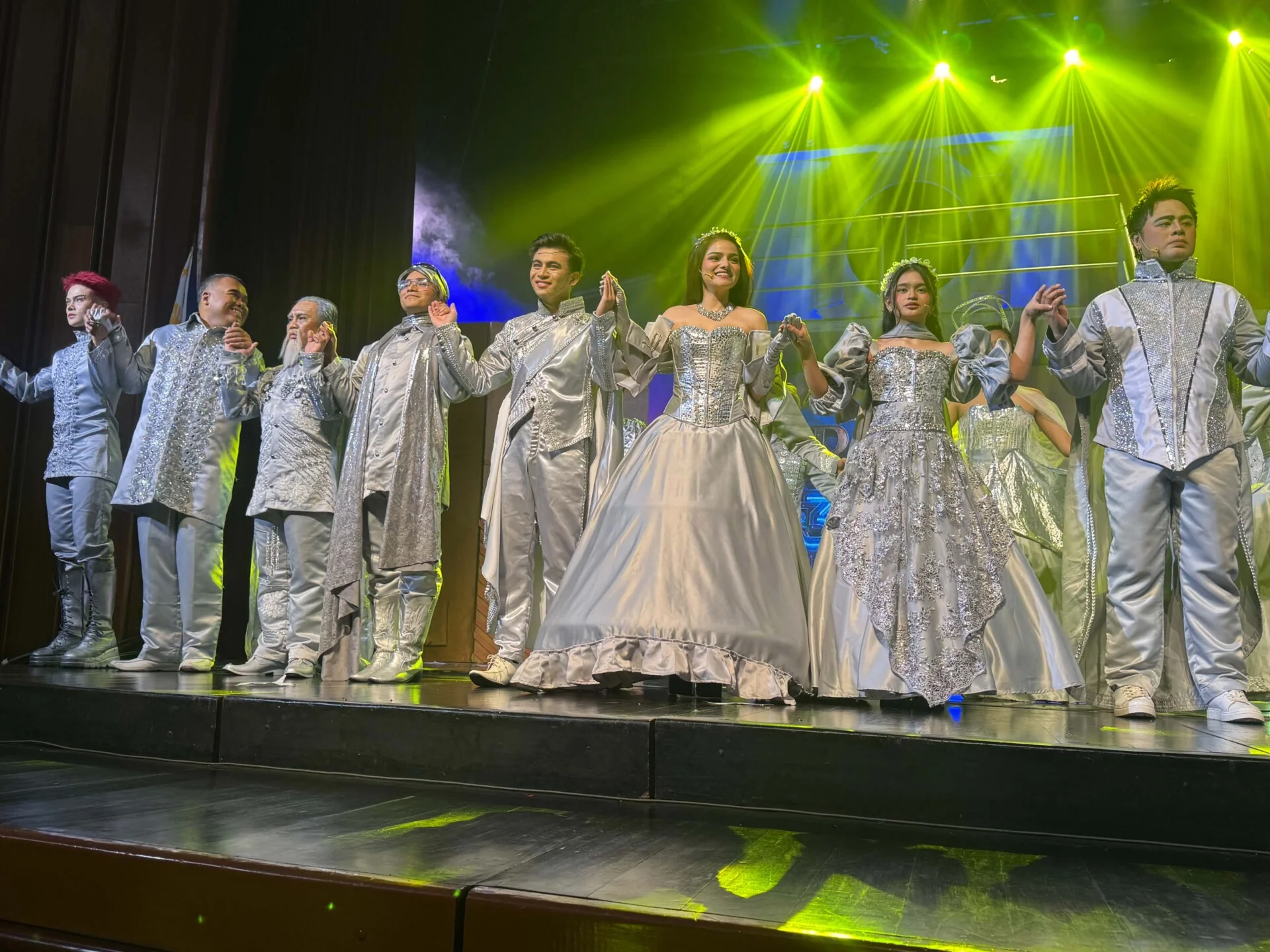
The effort is evident in the production’s visual presentation. The set, production design, costumes, and props suggest that considerable time, thought, and resources went into building the world of Rizal 3000. The futuristic aesthetic distinguishes the musical from a straightforward period piece, while the historical elements keep its main subject firmly in view.



The cast also helps bring the story to life. Tañada portrays Iosephus Raval, alternating with Vance Larena, while Johnrey Rivas, John Arcenas, and Ken Intano share the role of Jose Rizal. James Ramada plays Franchesco, alternating with Peter Parker Tañada and Toby Nicanor.

Character actor Mon Confiado was among the audience members of the October 11 production
The supporting ensemble includes Joseph Tañada, Gerald Magallanes, and JP Lopez as Forti Zaragoza; OJ Arci and Bea Martin as Rosinie Raventhorne, with Martin also portraying Yay-ai; Vean Olmedo and Reign Marpuri as Leone; Yvonne Ensomo and Kris Robles as Leonor Rivera; Renee Escurel and Danielle Francia as Josephine Bracken; Elia Ilano, Francine Galvez, and Clare Bautista as Eden; and Fidel Redado and Eliseo Hermosa as Andreus.
Behind the production are choreographers Anthony Cruz and Gerald Magallanes, dramaturg Anton Juan, costume designer Emy Tañada, production designer Kris Manubay, and technical director and lighting designer John Paul Santos. Together with Cifra’s musical score, their work supports a production that seeks to make history accessible through multiple theatrical elements.
But the spectacle is only part of what makes Rizal 3000 worth watching.
In another passage of his director’s notes, Tañada questioned why the arts, which nurture imagination, critical thinking, empathy, patriotism, and cultural identity, are increasingly treated as expendable. For him, theater is not simply entertainment. It is also education, history, and a reflection of who Filipinos are and who they might become.
This is where the musical’s message becomes especially relevant to the current conversation about Philippine education. I share Tañada’s advocacy for restoring a stronger history subject in the Department of Education’s curriculum. Knowing our past should not be reduced to memorizing names, dates, and events for examinations. It should help young Filipinos understand the struggles that shaped the country, recognize the sacrifices made for its freedoms, and develop the judgment to question the choices made by those in power.
Rizal 3000 approaches this challenge by meeting its audience where it is. The laughter and excitement are not distractions from its historical message. They can be the very things that encourage students to listen, reflect, and ask questions. A production that makes young people enjoy themselves while introducing them to ideas worth discussing has already accomplished something meaningful.
Tañada’s concern is that a country that abandons its history risks surrendering its future. As he wrote, “May this musical remind us that freedom begins with memory, that courage begins with truth, and that the arts remain among the most powerful guardians of both.”
Tañada’s closing words in his director’s notes sum up the production’s purpose: “Mabuhay ang sining. Mabuhay ang kasaysayan. Mabuhay ang Pilipinas.”
After watching the students of Pasay National High School respond so enthusiastically on October 11, I was reminded that making history matter to the next generation requires more than telling them that they should remember. We must also find ways to make them care.
Rizal 3000 makes that attempt through music, humor, romance, and theatrical spectacle, but its most important contribution lies in the question it leaves behind, What becomes of us when we no longer know the stories that made us who we are?
As Tañada noted, “If Rizal 3000 leaves you with one lasting thought, let it be this: a nation that forgets its history risks surrendering its future. May this musical remind us that freedom begins with memory, that courage begins with truth, and that the arts remain among the most powerful guardians of both.“
The musical is currently running. Tickets are priced at ₱500 and may be purchased through advance reservation or as walk-ins, subject to availability. For reservations and inquiries, contact Stephanie Cansino at 0924-316-7038.